

When I first started doing prison ministry, I expected to quickly rack up stories of myself as the hero: stories of how I was able to help someone on hard drugs to get clean, or help someone to find Christ, or help a violent man to become less reactive and more peaceful.
Three months in, I realized I didn’t have any stories that painted me as the hero. I chalked this up to me being new.
I’m over half a year in now, and partway through a prison chaplaincy training program, and I’m realizing that I’m never going to rack up stories like this. Because they don’t exist.
Don’t get me wrong: I’ve seen some very cool stuff happen in prison. But in each of those stories, I’m not the hero. God is. I’m just the guy who gets to watch.
One of the men I work with in prison used to be a very violent drug-dealer. Now he’s found Christ and he’s incredibly peaceful. He mostly sits in his room and prays for people, because he says that God’s given him everything he needs. This man is repentant, humble, and is willing to forgive infractions that he would have stabbed his fellow inmates for in years gone by.
This man became a Christian before I joined the ministry. So one day I asked one of my co-facilitators, who had worked with him for longer, what my co-facilitator had done to help this man change. My co-facilitator’s answer (paraphrased): “It wasn’t me. It was all Jesus.”
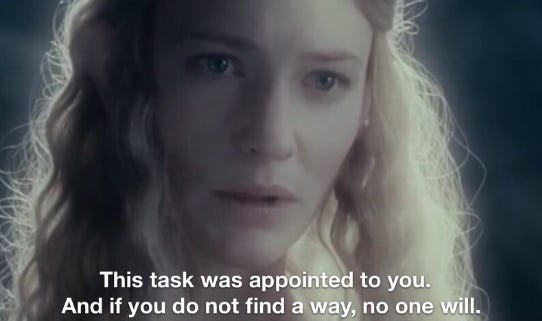
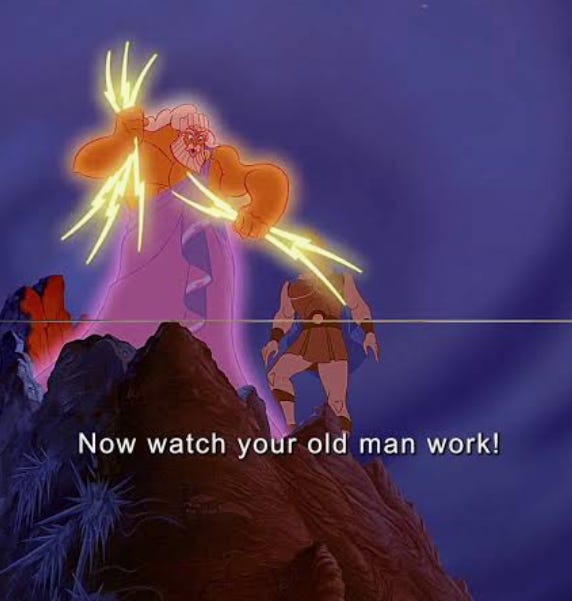
I made a meme that more or less sums up how I view the division of labor between myself and God when it comes to helping other people.
How I thought God would speak to me when I started doing ministry:
How He actually speaks to me:
I think sometimes those of us in ministry can start to kid ourselves that we’re the ones doing the hard work of advancing the Kingdom. We can tell ourselves that it’s our toil and our devotion that help people to find Christ.
This is bad for our humility. It’s also bad for our well-being and mental health. I knew one spiritual coach who told me that he beat himself up constantly because “What if I said the wrong thing?” This man was convinced that he could do irreparable harm to his clients if he screwed up.
But luckily, the idea that the weight of the world rests on our shoulders isn’t just bad for us: it’s also untrue.
I know in my case at least, if I stayed at home and watched TV instead of going into prison, God could just raise up a stone to do the job instead (Matthew 3:9). As the great English poet John Milton put it over three centuries ago, “God doth not need / Either man’s work or his own gifts.”
God doesn’t partner with us because He needs us. He partners with us because He loves us and enjoys doing things with us. Maybe it’s time that we let some of the weight of our ministry fall off of our shoulders.
Heal the West is 100% reader-supported. If you enjoyed this article, please consider upgrading to a paid subscription or becoming a founding member. I greatly appreciate your support.
It’s a partnership! God certainly doesn’t need us. But when we let ourselves be used, He uses us and does great things!
Love this one! Reminds me of the Dads who let their little kids "help" by holding the flashlight.